More than four in five visitors say they’re struck by a quiet sense of calm the moment they step onto Megève’s cobbled lanes. It’s not just the snow-dusted rooftops or the scent of pine in the air - it’s the feeling of stepping into a world where time moves differently. Here, Savoyard traditions aren’t preserved behind glass; they’re lived. This is a village that wears its history lightly but proudly, where alpine elegance meets authenticity. And for many arriving from afar, the journey into this mountain heartland begins with a simple decision: how to get here with ease.
Preserving the soul of a Megeve traditional village
The architectural heritage of the historical centre
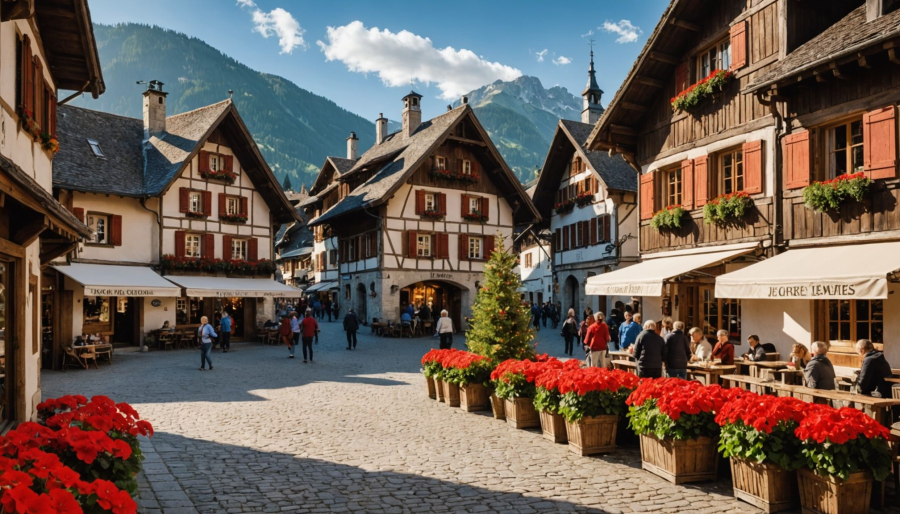
Built around a medieval square that has welcomed travelers for centuries, Megève’s old town reveals its soul through stone and timber. The Saint-Jean-Baptiste church, with its weathered spire, stands as a silent witness to generations of villagers who’ve marked time by its bells. Around it, traditional farmhouses - once home to livestock and families - now shelter artisan boutiques and family-run cafés, their facades still bearing the marks of centuries-old craftsmanship. Wooden balconies overflow with flowers in summer, while winter wraps the streets in a hush broken only by footsteps on frozen gravel.
- Medieval square - the historic heart of village life since the 13th century
- Saint-Jean-Baptiste church - a blend of Romanesque and Gothic architecture
- Traditional Savoyard chalets - featuring carved wood, stone foundations, and steep roofs
- Former barns and stables - repurposed with care, preserving original beams and details
- Cobbled lanes - laid out organically, reflecting centuries of foot and hoof traffic
Many travelers looking for convenience after landing find that a reliable Geneva to Chamonix transfer remains the most seamless way to reach the valley - and from there, continue to Megève with minimal hassle. The journey itself becomes part of the experience, winding through alpine passes where the air grows crisper with every mile.
Savoyard culture and the art of alpine living
Local cuisine and traditional mountain crafts
Walk through Megève in the early morning and you’ll catch the scent of warm bread and reblochon cheese baking in wood-fired ovens. The weekly market isn’t just a tourist draw - it’s where locals gather to trade stories as much as goods. Hand-carved wooden bowls, linen aprons stitched with alpine motifs, and copper cookware hang in shop windows, each piece a nod to skills passed down through families. These aren’t souvenirs made for mass production; they’re heirlooms in the making.
| Season | Traditional Activities | Cultural Significance |
|---|---|---|
| Winter | Sleigh rides, torchlit processions, cheese fondue evenings | Rooted in pre-industrial rural life - keeping warmth and community alive during long nights |
| Summer | Haymaking festivals, mountain herding, craft fairs | Reflects the agrarian calendar - celebrating livestock, harvests, and alpine pastures |
In a world of fleeting trends, Megève moves at the pace of seasons and seasons only. The village doesn’t just host traditions - it lives them. And that authenticity? It’s not staged. It’s inherited.
Exploring the majestic surroundings of Mont Blanc
Authentic outdoor activities for all seasons
Mountains here aren’t just scenery - they’re the rhythm of life. In winter, the slopes around Megève offer more than just skiing; they offer a landscape shaped by centuries of alpine stewardship. Trails follow old mule paths, winding through forests where silence is broken only by the crack of a distant avalanche or the call of a chamois. Summer brings a different kind of hush - the sound of cowbells drifting from high pastures, where herders still practice transhumance, the seasonal movement of livestock.
Sustainable heritage tourism in the French Alps
Megève has long been elegant, but never at the cost of its roots. Unlike resorts that have expanded unchecked, the village has maintained tight control over development. New buildings must adhere to strict architectural codes - no glass towers or concrete blocks. Instead, stone, wood, and slate reign. The goal? To ensure that the next generation of visitors still finds the same authentic atmosphere that first drew the Rothschilds nearly a century ago.
This balance isn’t easy. Fame brings demand, and demand brings pressure. Yet Megève resists the temptation to become a polished imitation of itself. It’s not about rejecting modernity - it’s about integrating it thoughtfully. A new boutique hotel might have underfloor heating and Wi-Fi, but its roof will still slope steeply to shed snow, and its walls will still rise from local stone. That’s the Savoyard heritage in action: evolving without erasing.
FAQ
Are horse-drawn carriages available throughout the entire year?
Horse-drawn carriages operate seasonally, primarily in winter and early summer. They’re a popular way to tour the village center, especially during festive periods. Availability depends on weather and local events, so it’s best to check in advance. They’re not a daily service, but rather a traditional experience offered on select days.
What is the average price for a traditional Savoyard dinner in the village?
A traditional Savoyard dinner at a mid-range restaurant typically ranges from 35 to 60 euros per person. This includes dishes like tartiflette, fondue, or diot sausage. Higher-end establishments may charge more, especially with wine pairings. Prices reflect the quality of local ingredients and the village’s reputation for refined alpine dining.
How has the village adapted its historic center to pedestrian-only zones recently?
The historic center has gradually expanded pedestrian-only areas to reduce traffic and preserve the charm of its cobbled streets. Cars are restricted during peak hours, and parking is directed to peripheral lots. These changes support safer walking conditions and a quieter atmosphere, aligning with the village’s commitment to sustainable tourism and heritage preservation.
Which is the best spot for a first-time visitor to see Mont Blanc from the village?
The Place du Peyrou offers one of the clearest views of Mont Blanc from the village center, especially on clear mornings. For a more elevated perspective, the Chemin des Villards walking path provides a panoramic outlook without requiring a long hike. Both spots are easily accessible and ideal for capturing the mountain’s grandeur.
